Casêra: fresh comfort-food delivery
Period: April to May 2024 | 40 days from zero to pitch
Team: 4 people. Evaldo and I (Product) · Paula and Josué (Marketing)
Problem
Workers value healthy food, but don't practice it.
The intention-behavior gap showed up in every interview. No service on the market combined freshness, personalization, convenience, and warmth.
My role
End-to-end design in 40 days, from discovery to pitch.
I worked on quantitative and qualitative research, insight synthesis, the pivot, information architecture, the MVP interface, and the pitch deck.
Outcome
The project closed at the pitch stage, with no production metrics.
What the research validated:
The problem is real and recurring: the intention-behavior gap appeared in all 11 interviews.
No competitor sits at the intersection of the 4 axes: freshness, warmth, personalization, and convenience. Validated by market benchmark.
10/10 score from the MBA panel.
01 - Context
The idea came out of an innovation program with a fixed pitch deadline
Starting question:
How might we create a healthy eating solution for workers with hectic routines?
02 - Discovery
CSD Framework
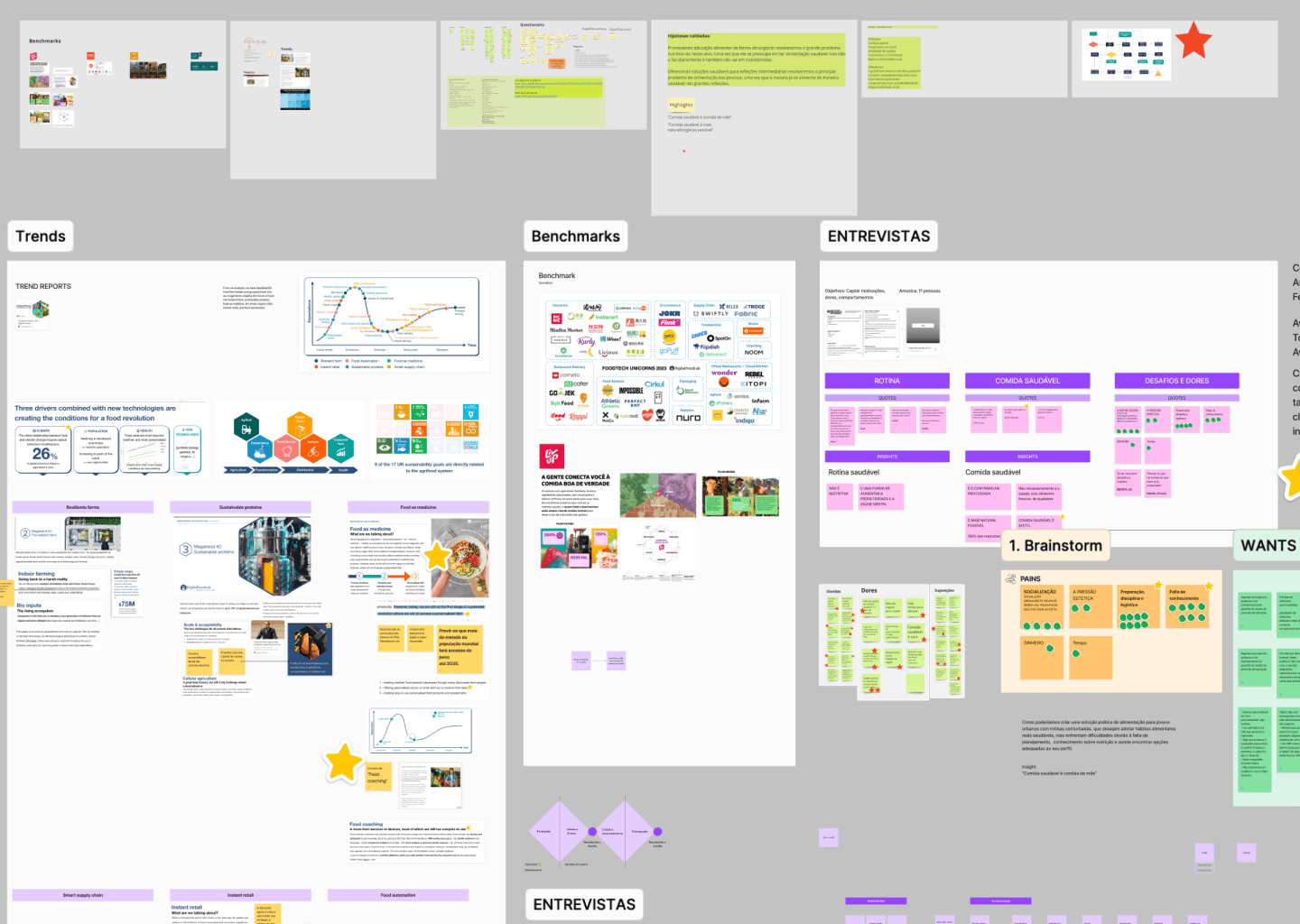
Before going into the field, we mapped what we needed to know
Quantitative research
Goal: identify patterns that justified going deeper qualitatively.
32 respondents. Urban young adults, 22 to 36, office workers, with declared concern about their eating habits.
3 patterns:
Intention-behavior gap around healthy eating.
Price stacks alongside quality and variety as the most valued attributes.
Most don't use any service or app for healthy eating.
Qualitative research
Scripts structured by complexity: routine, definition of healthy food, challenges, enablers, and imagined solutions.
11 interviews produced 3 clusters:
Zens
Balance between body and mind. They hold an emotional view of food.
The Strict Ones
Frenetic pace, regimented eating, looking for practicality.
Wannabes
Growing interest in healthy eating, but no clear starting point.
The insight that reorganized the project:
Healthy food is mom's cooking.
All the data took on new meaning. Health and warmth occupied the same place in consumer perception.
03 - Evidence-based decisions
04 - Value proposition
No player on the market combines the 4 axes.
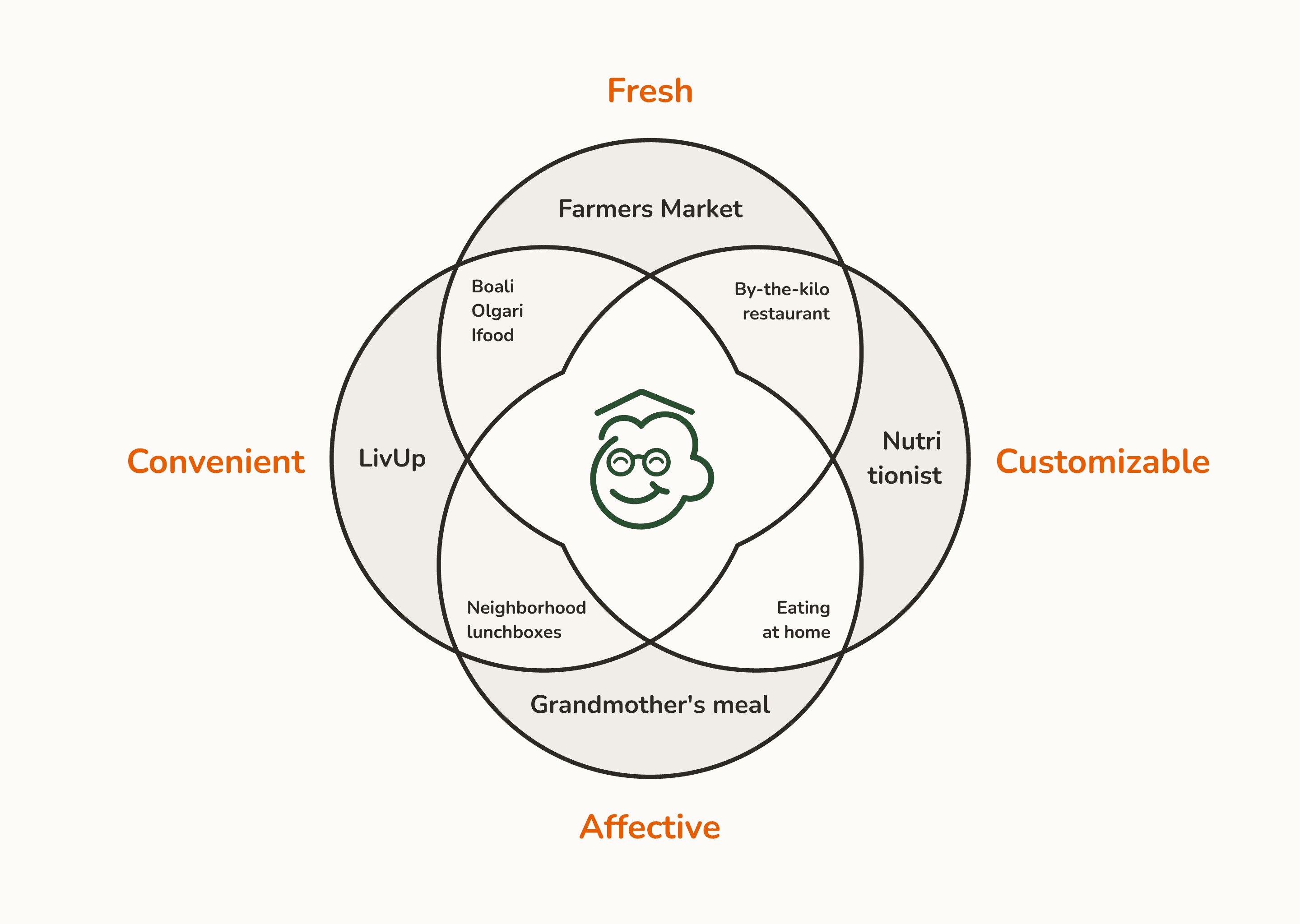
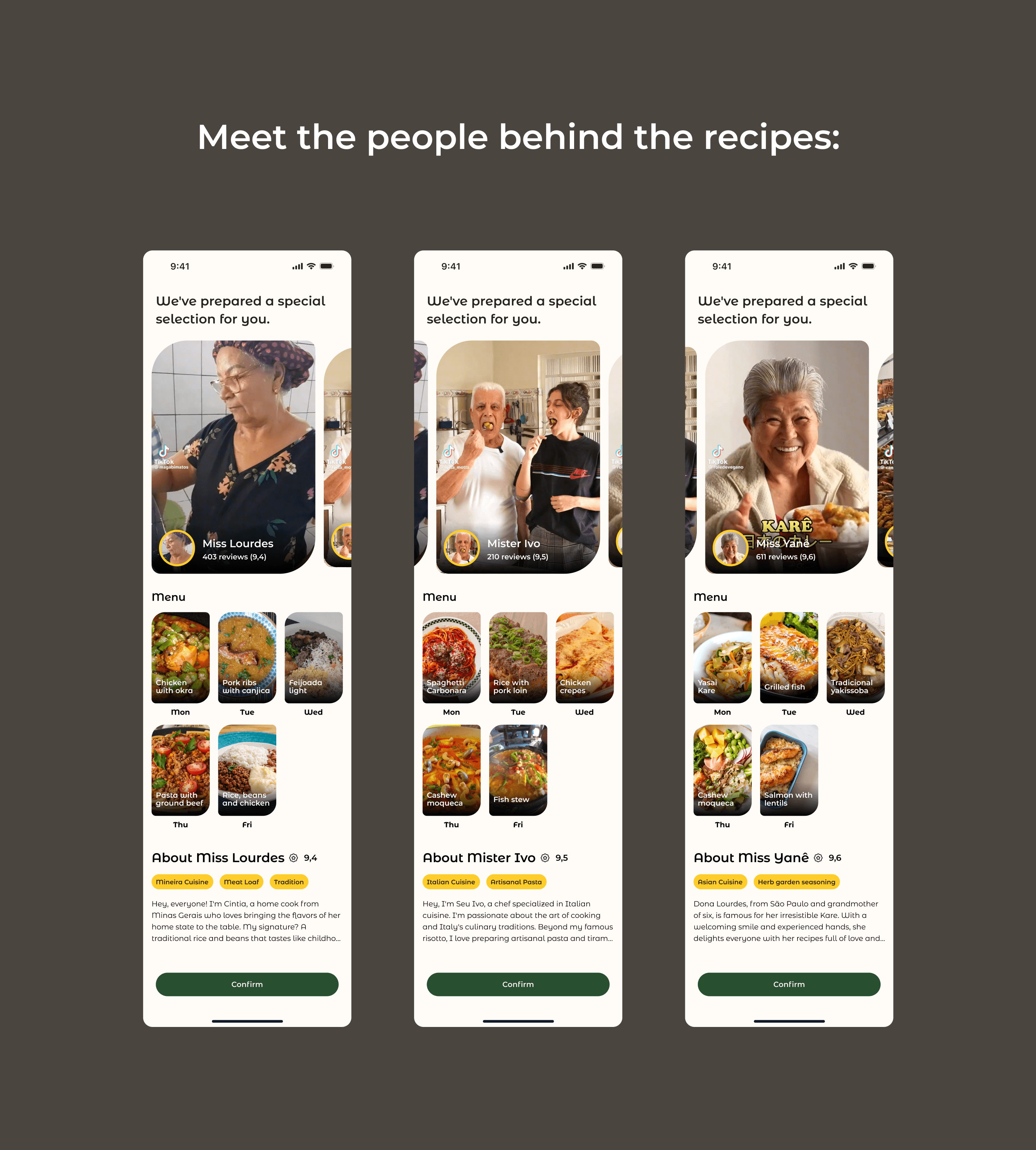
Casêra: weekly delivery (fast) · prepared same day (fresh) · home cooks with names and faces (warmth) · menu with nutritional guidance (personalized).
05 - Pivot
Home cooks preparing meal boxes in their own homes raised constraints that put the idea's viability in doubt:
Sanitary regulation: hard to guarantee hygiene standards in domestic kitchens.
Nutritional standardization: precise macro grammage is incompatible with artisanal prep without training.
Scale: high demand would break individual production capacity.
Public perception: outsourcing production to elderly women in a gig model raised reputational risk.
Warmth was the differentiator. Letting it go meant becoming another generic healthy delivery.
We separated authorship from execution. The cook owns the recipe, is the face of the dish, and earns commission per meal sold. Production is on us.
06 - Architecture & flows
MVP
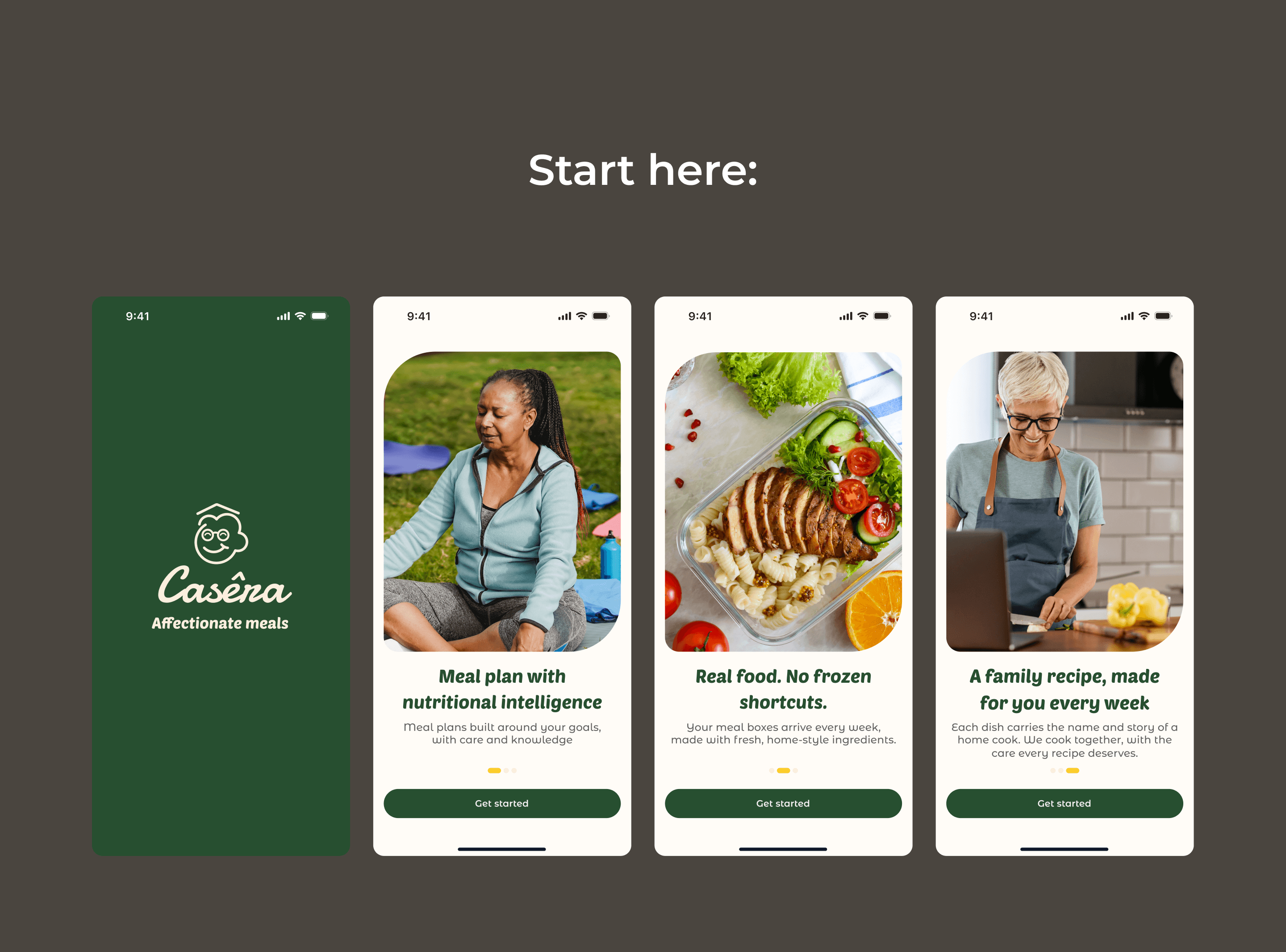
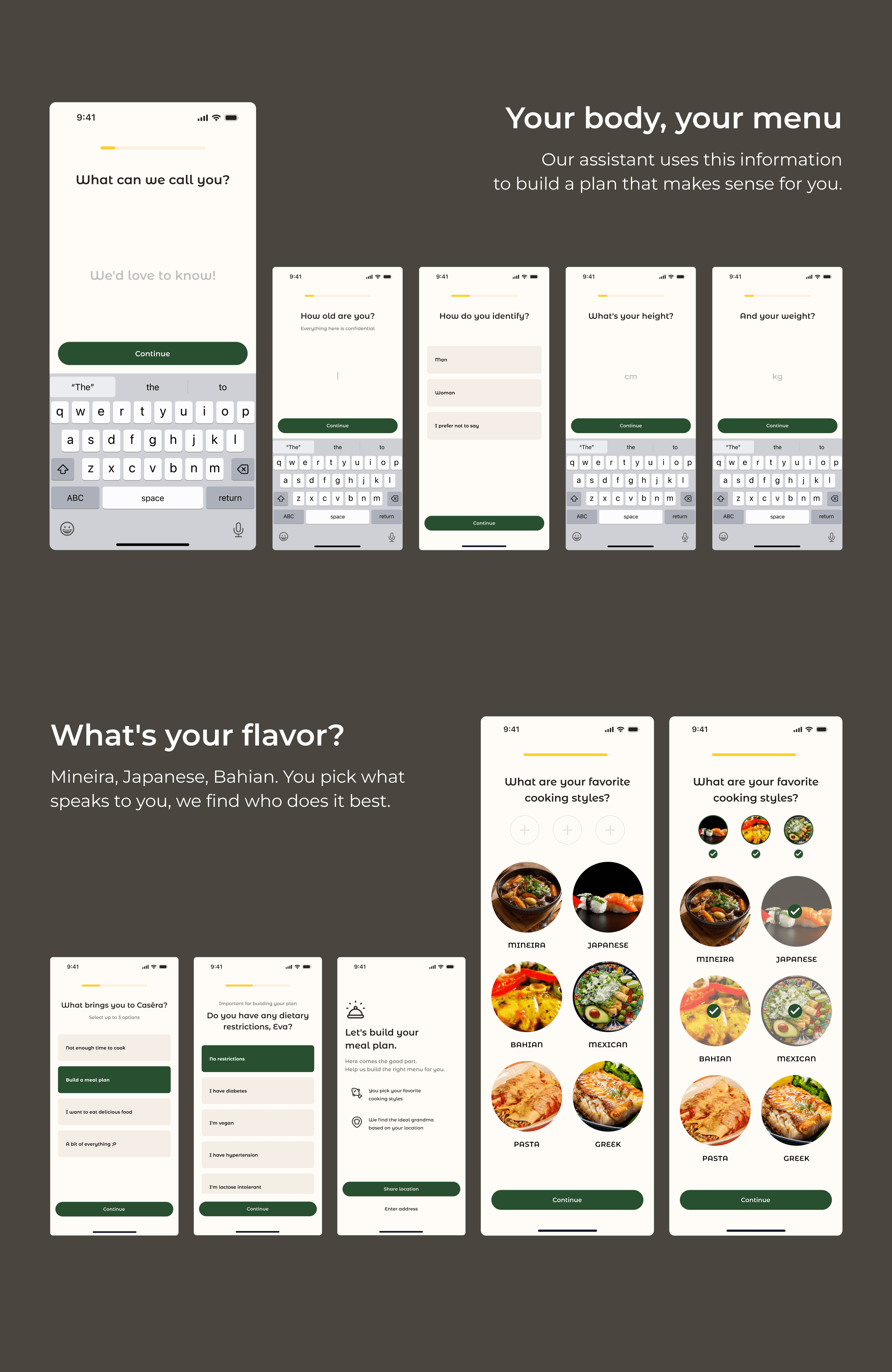
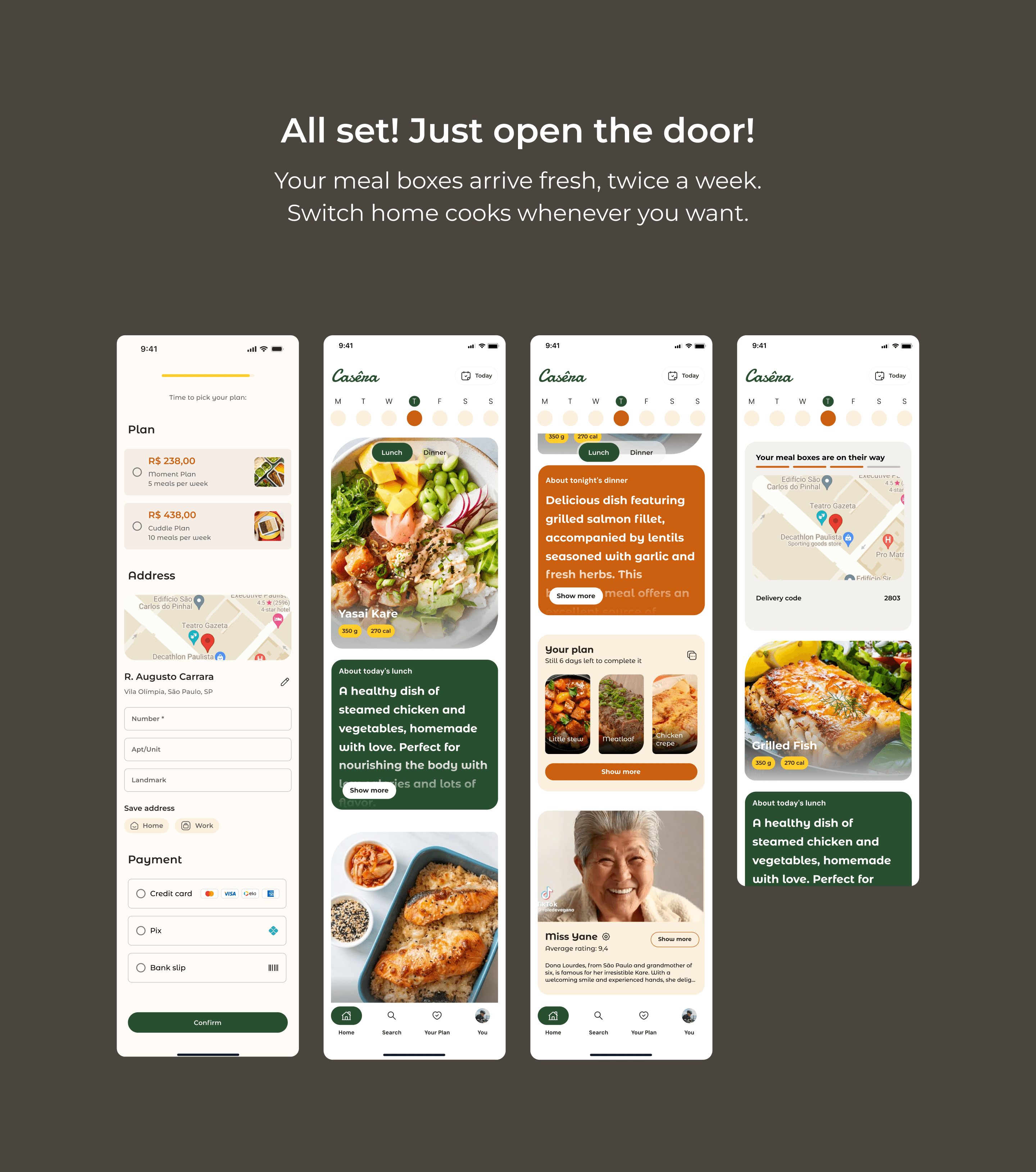
Minimum cycle: signup → nutritional onboarding → plan → cook → first order
The extended flow is justified by the model itself: a personalized menu depends on the nutritional profile. Not tested with users.
07 - Conclusions
Lessons
The double diamond won't always come out round
The goal should be the most complete process possible, while understanding that constraints and changes are part of any real project.
We confirmed the problem, not the product
We know the intention-behavior gap exists. We didn't test whether people would pay, whether cooks would sign up, or whether the onboarding causes drop-off.
Small samples demand honesty
32 respondents is not a statistical sample. 11 interviewees is not theoretical saturation.
What I'd do differently
Interview real cooks before defining the model.
Test the onboarding with 3 to 5 people on a prototype. One day of prep, one day of testing.
Next steps
Fake door test: landing page with plans and a pre-signup CTA to measure demand before investing in operations.
Research with cooks: interviewing real cooks would give a real read on the product's reception and the viability of the value proposition.
Usability test: measure drop-off in the extended onboarding.